
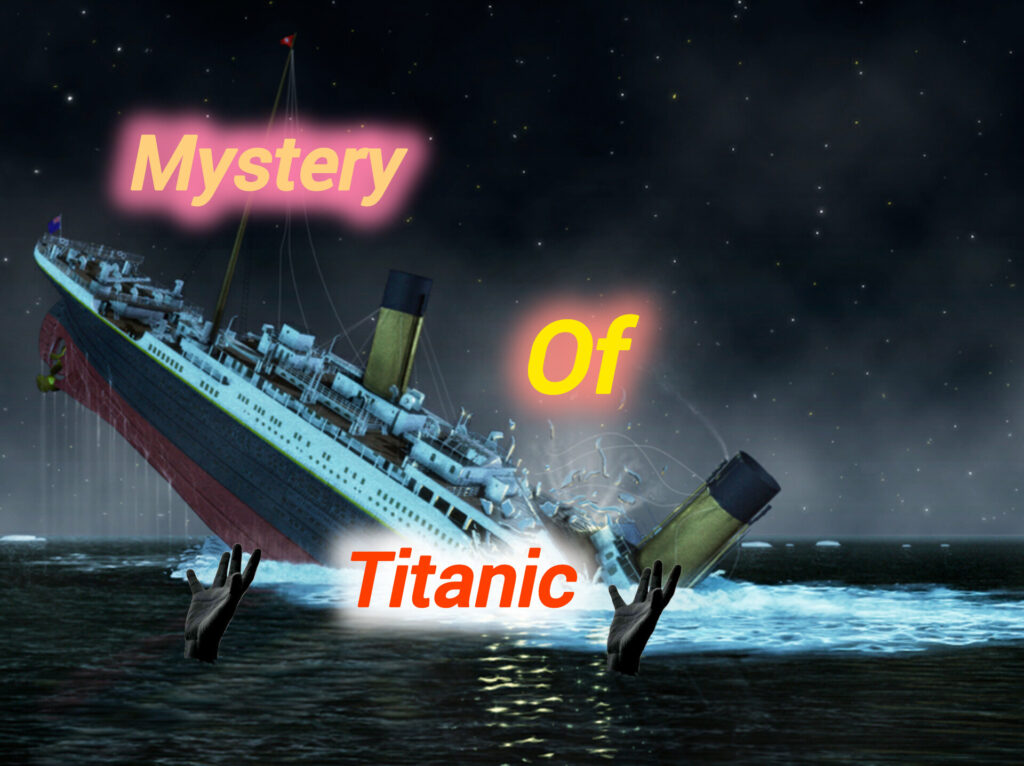
How and why did the world’s largest ship sink?
If there’s one maritime disaster that is most frequently mentioned in the history of the world, it’s the sinking of the Titanic. When the Titanic began its maiden voyage from Southampton, England to New York on April 10, 1912, it was called an unsinkable ship. But fate had other plans, and within just five days, this massive ship sank into the depths of the ocean. What was the reason that even the best technology of the time couldn’t save it from sinking? Let’s find out from the beginning.
A Grand Beginning and Unparalleled Luxury
The Titanic was not only the largest but also the newest ship of its time. It was 269 meters long and over 50 meters high. The construction of this ship cost approximately $7.5 million at the time, which is equivalent to more than $400 million (approximately 3,300 crore rupees) today. The amenities inside the ship surpassed even those of a five-star hotel. It had a heated swimming pool, Turkish baths, a gym, a squash court, four luxurious restaurants, and a very large library. It was “a paradise.” On board were some of the world’s wealthiest people, as well as those seeking a better future in America. The ship was commanded by the experienced 62-year-old Captain Edward John Smith.
April 14, 1912: That Unlucky Night
The Titanic was speeding towards its destination in the Atlantic Ocean. The ship had begun receiving warnings about icebergs. Although the captain slightly altered the course, he did not reduce the ship’s speed. (40 km) On the night of April 14th, the moon had not risen, resulting in very little light. At approximately 11:39 PM, Frederick Fleet, sitting at the ‘Crow’s Nest’ (lookout point), suddenly spotted a massive iceberg directly ahead. He immediately rang the bell three times and alerted the officers. But it was too late. The very next minute, the Titanic collided with the giant iceberg.
Why did the ship sink?
The Titanic was considered “unsinkable” because its lower hull was divided into 16 watertight compartments. According to the design, even if four compartments flooded, the ship would still remain afloat. However, the collision with the iceberg was so powerful that six of the ship’s compartments were breached. In addition, the Titanic had some technical flaws:
• Single Layer: While the bottom of the ship had a double layer, the sides, where the collision occurred, had only a single layer.
• Insufficient Lifeboats: There were approximately 2,200 people on board, but there were only 20 lifeboats, with a capacity for only 1,200 people. The company was confident that they would never be needed, as it was an unsinkable ship
Could this disaster have been prevented?
During the investigation, some surprising facts came to light
• Negligence of the SS California:
This ship was only 37 km away from the Titanic. They had sent a warning to the Titanic, but the Titanic’s radio operator ignored it. Later, when the Titanic fired distress rockets, the captain of the California thought that perhaps a party was going on. If that ship had arrived in time, perhaps not a single life would have been lost.
• Steering Error: It is said that Robert Hichens, who was at the helm, panicked and turned the ship in the wrong direction, making the collision even more fatal.
• Pressure to Maintain Speed: Pressure to Maintain Speed: Joseph Bruce Ismay, the director of the shipbuilding company, wanted the Titanic to set a record on its maiden voyage. This pressure led Captain Smith to maintain speed despite warnings.
Rescue Efforts and Heartbreaking Scenes
After the collision, chaos ensued. According to regulations, women and children were given priority in the lifeboats. Many lifeboats were launched half-empty because people simply couldn’t believe that the Titanic could sink. By 2:20 AM, the Titanic had broken in two and completely sunk. Those who fell into the water died from hypothermia in the icy -2°C water.
Where is the Titanic now?
And its current condition It took scientists years (73 years) to find the wreckage of the Titanic. In 1985, Robert Ballard discovered it at a depth of 3.8 km below the sea surface. Today, the ship is rapidly deteriorating. Marine bacteria are eating away at its iron. Experts believe that by 2030, the Titanic will have completely disintegrated.
Conclusion and Changes
This tragedy changed maritime regulations worldwide forever. The “SOLAS” (Safety of Life at Sea) convention followed, which now mandates that every ship must have enough lifeboats for every passenger. The story of the Titanic teaches us that human technology can sometimes fail in the face of the power of nature.
| all information with video | https://youtu.be/id00R-3OmJ0?si=4BJonC41xj55j7T6 |
| more Mystery | https://riostar18.com/the-ultimate-mystery-of-the-mona-lisa-why-this-small-painting-rules-the-art-world-in-2026/ |